What an offshore pod really costs — and where the savings leak away
The rate card is real. So are the four places the difference quietly goes back out again.
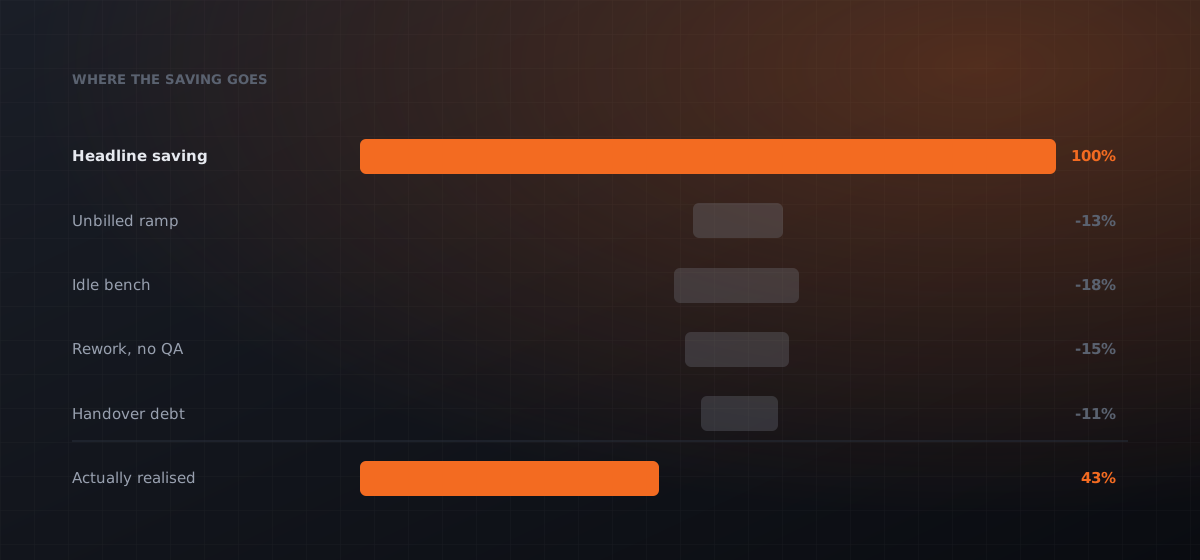
The pitch is always the same arithmetic: a senior engineer costs a fraction of the onshore equivalent, so a team of eight looks like a team of two. The arithmetic is genuinely real. What it leaves out is where the difference goes.
Start with the rate itself
A fair offshore rate for an experienced AI developer sits around $1,500 a month; a lead architect around $3,000; a business analyst or QA engineer around $1,200. Those are checkable against local salary data in any delivery market. When a vendor quotes double for the same role, you are not paying for scarcity — you are paying margin, and it is reasonable to say so.
Leak one: unbilled ramp
A pod that starts with no written scope spends its first fortnight discovering the requirement, at full rate. This is the cheapest leak to close and the most commonly ignored: agree the scope and the acceptance criteria before anyone is staffed.
The cheapest sprint is the one you do not have to repeat.
Leak two: the bench you cannot see
Vendors who scale to twelve people on day one, rather than growing as milestones land, are billing for capacity you have no work for. A phased structure — eight for the first quarter, ten for the second, twelve once there is genuinely that much work — costs less and ships the same.
Leak three: no QA
A dedicated QA engineer is the cheapest role on the sheet and the one most often missing from the proposal. Leaving it off does not save you $1,200 a month. It costs you developer time, at a higher rate, spent fixing things twice.
Leak four: the handover you never planned
- Who owns the repositories — you, or the vendor?
- Is the documentation written as you go, or promised at the end?
- What happens to credentials and infrastructure if you stop?
- Could another team pick this up in a fortnight?
None of this argues against offshore delivery. It argues for reading the shape of the proposal rather than the bottom line. Ask what the team looks like in month one versus month nine. Ask who does the testing. Ask what happens to the rate when a milestone slips.
The vendors worth hiring have answers ready, because they have already had the argument with themselves.