
Staff augmentation or a project contract? A two-minute test
One is a person you manage. The other is an outcome you buy. Getting the distinction wrong is the most expensive mistake in the category.
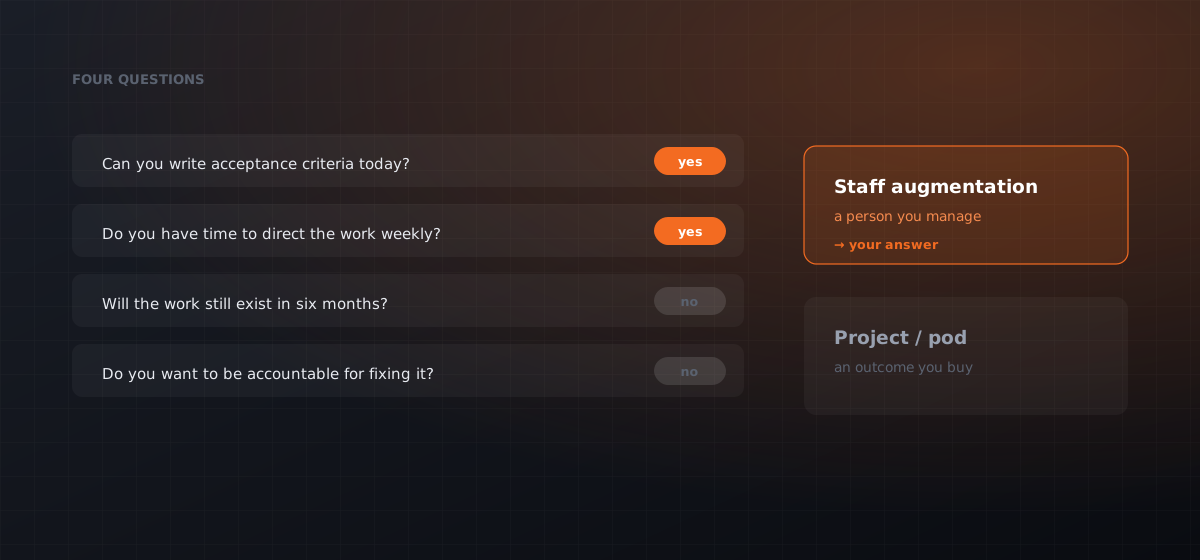
Buyers reach for staff augmentation because it feels lower risk — you can release someone next month. Sometimes that is right. Often it quietly transfers a delivery problem onto a manager who is already at capacity.
The test
Answer these four honestly. They take two minutes and they are usually unanimous.
- Do you know exactly what needs building, in enough detail to write acceptance criteria today?
- Do you have someone with time to direct this person's work every week?
- Will the work still be there in six months, or does it end?
- If it goes wrong, do you want to fix it, or do you want someone else accountable for fixing it?
Mostly yes to the first two and the work continuing: staff augmentation. You have the clarity and the management capacity, and you want the capability to stay in-house.
Mostly no, or the work has a defined end: buy the outcome. A project or a dedicated pod puts the scoping burden and the delivery accountability on the vendor, which is what you are actually short of.
The honest version of each
Staff augmentation works when you can direct the work. A contractor who is good and well-directed is excellent value. The same contractor with no direction produces exactly what was asked and nothing more — which is not their failing.
Project-based works when the scope can be pinned down. If requirements are genuinely unstable, a fixed-scope contract turns every discovery into a change request, and both sides end up unhappy.
If you cannot write the acceptance criteria, do not buy a fixed scope. If you cannot direct the work weekly, do not buy a person.
Most disappointing engagements were not badly executed. They were the wrong shape from the first conversation.